Hot Water Systems Built for Efficiency
Tankless Water Heater Services in Littleton for homes upgrading from tank systems or replacing aging tankless units
Tankless water heaters heat water on demand as it flows through the unit rather than maintaining a standing supply in a storage tank, which eliminates standby energy loss and provides continuous hot water as long as demand stays within the unit's capacity. You need this service when your current tank heater has reached the end of its lifespan, when limited space makes a compact heating solution attractive, or when household usage patterns involve back-to-back showers that deplete tank reserves. EDB Plumbing and Drain Cleaning installs and replaces tankless systems throughout Littleton, sizing units based on simultaneous hot water demands and the incoming water temperature typical to the region.
Installation requires calculating the flow rate needed to supply multiple fixtures at once—such as a shower running while the dishwasher operates—and selecting a unit with adequate heating capacity measured in gallons per minute at a specified temperature rise. Cold groundwater temperatures in Littleton mean tankless units must heat incoming water from roughly fifty degrees to the desired output temperature, affecting the unit size required.
Schedule a consultation to determine if a tankless system aligns with your household hot water usage and facility constraints.
Why Sizing and Installation Matter
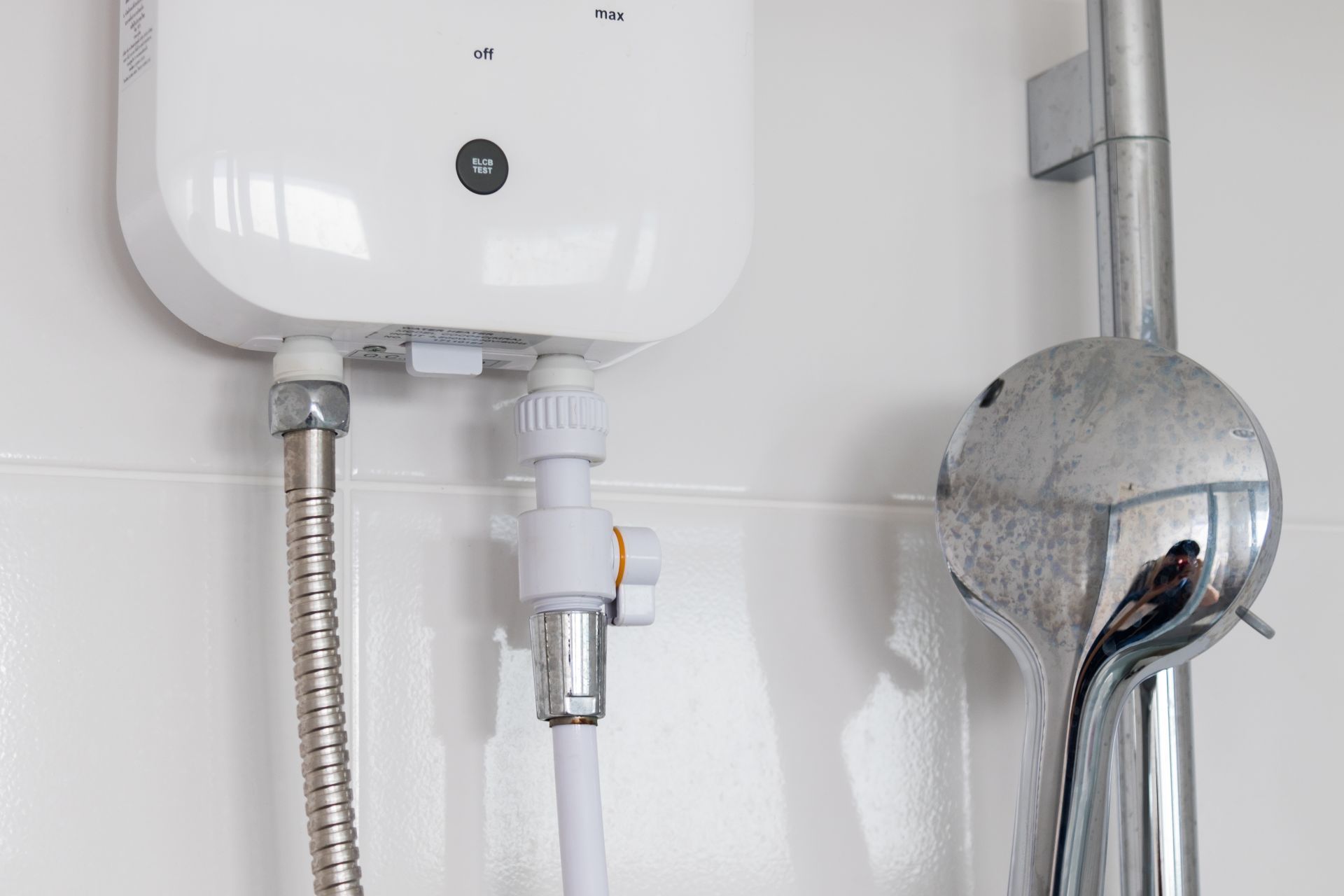
Professional installation involves mounting the tankless unit on an exterior or interior wall with proper venting for combustion gases, connecting gas supply lines or electrical circuits depending on the fuel source, and routing hot water lines to distribution points. Gas units require adequate venting through dedicated stainless steel flues, while electric models need substantial electrical capacity—often requiring panel upgrades to supply the amperage demanded by heating elements.
After installation, you notice hot water arrives at fixtures after a brief delay as the unit activates and heats the flowing water, then continues indefinitely without the temperature drops that occur when tank supplies deplete. The system occupies significantly less space than a forty or fifty-gallon tank, freeing up floor area in utility rooms or basements. Energy consumption decreases where appropriate because the unit only heats water during active use rather than maintaining temperature around the clock.
Honest recommendations include discussing whether your household's simultaneous usage will exceed a single unit's capacity and whether the upfront cost aligns with long-term energy savings based on your current fuel rates. Tankless systems work well for some households and less effectively for others depending on usage patterns, facility limitations, and expectations.
Questions Before Starting Your Project
Homeowners evaluating tankless water heaters often ask about performance differences and installation requirements before committing to the upgrade.
What's the difference between gas and electric tankless heaters?
Gas units typically provide higher flow rates and heat water faster, making them suitable for larger households, while electric models install more easily without venting requirements but may need electrical service upgrades to supply sufficient amperage.
Will a tankless heater supply enough hot water for my household?
Capacity depends on simultaneous demand—a properly sized unit handles typical usage like one shower and one sink running at once, but multiple showers operating simultaneously may exceed flow rate limits unless a larger unit or multiple units are installed.
How much space does installation require?
Tankless units mount on walls and occupy roughly the space of a suitcase, eliminating the floor footprint of traditional tank heaters, though gas models require clearance for venting and combustion air intake.
Do tankless systems work in Littleton's cold weather?
Cold incoming groundwater temperatures reduce the flow rate at which the unit can deliver hot water to the desired temperature, making proper sizing based on local conditions critical for adequate performance during winter months.
What maintenance do tankless heaters need?
Annual descaling removes mineral buildup from heat exchangers, particularly in areas with hard water, and periodic inspection of venting and burner components maintains efficiency and prevents failures.
EDB Plumbing and Drain Cleaning works with modern tankless systems and quality components to provide dependable performance. Arrange a planning session to review whether a tankless water heater fits your household's hot water requirements and facility configuration.